
Views: 846
PVC tarpaulin is a polyester-filament fabric coated with PVC on both sides. It is widely used as a protective material in everyday and industrial applications, combining waterproof performance with aging, antistatic and tear-resistance properties.
PVC TARPAULIN COATING AND FINISHING:
The vertical-machine process described below applies a PVC formulation to the base fabric, controls the coating with a knife scraper, then dries and finishes the coated material.
- Feed and straighten the fabric. The base fabric is drawn straight through the machine and into the PVC formulation tank.
- Apply the PVC coating. A high-purity PVC formulation adheres to the textile. Both sides are kept straight as the knife-scraping stage controls the coating layer.
- Dry the coated fabric. The material passes through a drying oven. The process described here uses either electric heating or a boiler-heated drying system.
- Trim and wind. After drying, the edges are trimmed and the material is slit and wound into rolls.
- Pack the finished material. The finished rolls are packaged for handling and supply.
Vertical-machine production places high demands on raw-material purity. PVC canvas produced by this process is often somewhat more expensive and has a high-purity coating formulation.
CHARACTERISTICS OF PVC TARPAULIN:
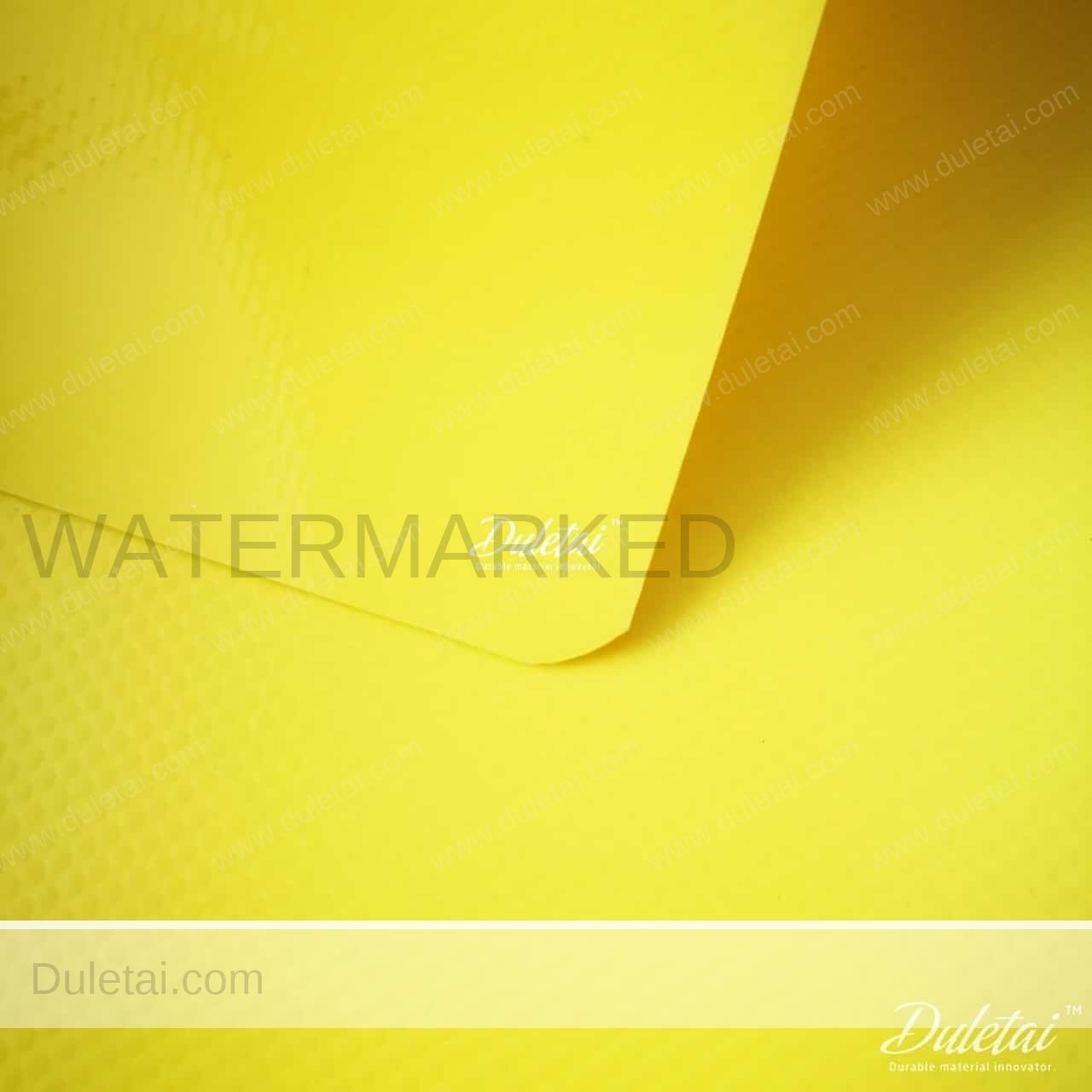
Appearance and coating surface
A well-produced surface has good color and luster with a glossy, reflective appearance. One side is flat and smooth, while the other may have a slightly granular texture. Appropriate resin content and processing temperature help produce a pinhole-free surface with high resin density, good aging resistance and long service life.
Tensile strength
The production process and material formulation help preserve the strength of the base fabric. A higher warp and weft yarn density contributes to greater tensile strength.
Waterproof performance
PVC tarpaulin provides 100% waterproof performance with a good, continuous coating and no pinholes. Raw-material quality, resin content and coating density influence the finished material’s performance.
Handle and thickness
The material has a soft handle without a rough feel. Although it can feel less bulky than expected, its thickness meets the intended requirements; the resin content and processing quality contribute to this soft finish.
Material and environmental performance
The construction uses polyester-filament base fabric with double-side PVC coating and selected high-quality, environmentally friendly resin. It has a smooth surface, bright colors and waterproof, fire-resistant, corrosion-resistant, mildew-resistant, cold-resistant, high-temperature-resistant, UV-resistant and anti-aging properties.
FAQ
What is the purpose of knife scraping in PVC tarpaulin production?
The knife-scraping stage controls the PVC coating layer on the textile as the fabric travels through the machine. Coating formulation and processing temperature also influence the finished surface, density and handle.
How is the coated tarpaulin dried and finished?
The fabric passes through a drying oven with electric heating or a boiler-heated system. It is then edge-trimmed, slit, wound into rolls and packaged.
What should I specify when selecting PVC coated tarpaulin?
Include the finished application, required weight, width, color, surface finish, quantity and fabrication method. Describe the waterproofing and other performance requirements for your product. Review the PVC tarpaulin material range or send your tarpaulin requirements.