Views: 763
PTFE coated fiberglass is a woven fiberglass material finished with polytetrafluoroethylene (PTFE). For architectural membrane projects, it combines a glass-fiber base with a weather-resistant coated surface and is supplied in membrane and open-mesh forms for different covering and shading requirements.
PTFE coated fiberglass combines material durability, daylighting and design flexibility for architectural membrane applications. The benefits below cover durability, environmental performance, lighting, maintenance, fire performance and design.
DURABILITY BENEFITS OF PTFE COATED FIBERGLASS:
- Lifespan exceeding 30 years
- Can withstand temperatures of -100 F to +450 F (-73 C to +232 C)
- Tensile strength of 500,000 PSI (more than 10 times the tensile strength of steel)
- Chemically inert
- Weather-resistant
- Resistant to micro-organisms
- Moisture-resistant
- Immune to UV degradation
- Resists the build-up of environmental pollution
- Does not discolor over time
- Does not become brittle over time
ENVIRONMENTAL BENEFITS OF PTFE COATED FIBERGLASS:
- Energy Star rated
- Cool Roof Rating Council certified
- PTFE coated fiberglass membranes reflect up to 73% of solar heat and hold only 7% on their exterior surface
- PTFE coated fiberglass provides thermal insulation to a degree similar to conventional glazing
- U value of approximately 4.0-5.0 for a single-layer application
- High shading coefficient, resulting in energy savings over traditional glass glazing
LIGHTING BENEFITS OF PTFE COATED FIBERGLASS:
- Highly transparent
- It allows natural daylight to reach the people below while also providing shading
- It is translucent, but still screens out ultraviolet rays and excess heat
- Reflects 75% of sunlight
- Absorbs 10% of sunlight
- Transmits 15% of sunlight
MAINTENANCE BENEFITS OF PTFE COATED FIBERGLASS:
- Regularly self-cleaning with rainwater
- A manual clean every 2-5 years is recommended, but because the fabric strength can support human weight, this can be done easily with jet-washers or soft brushes and access to the roof
- No internal cleaning required
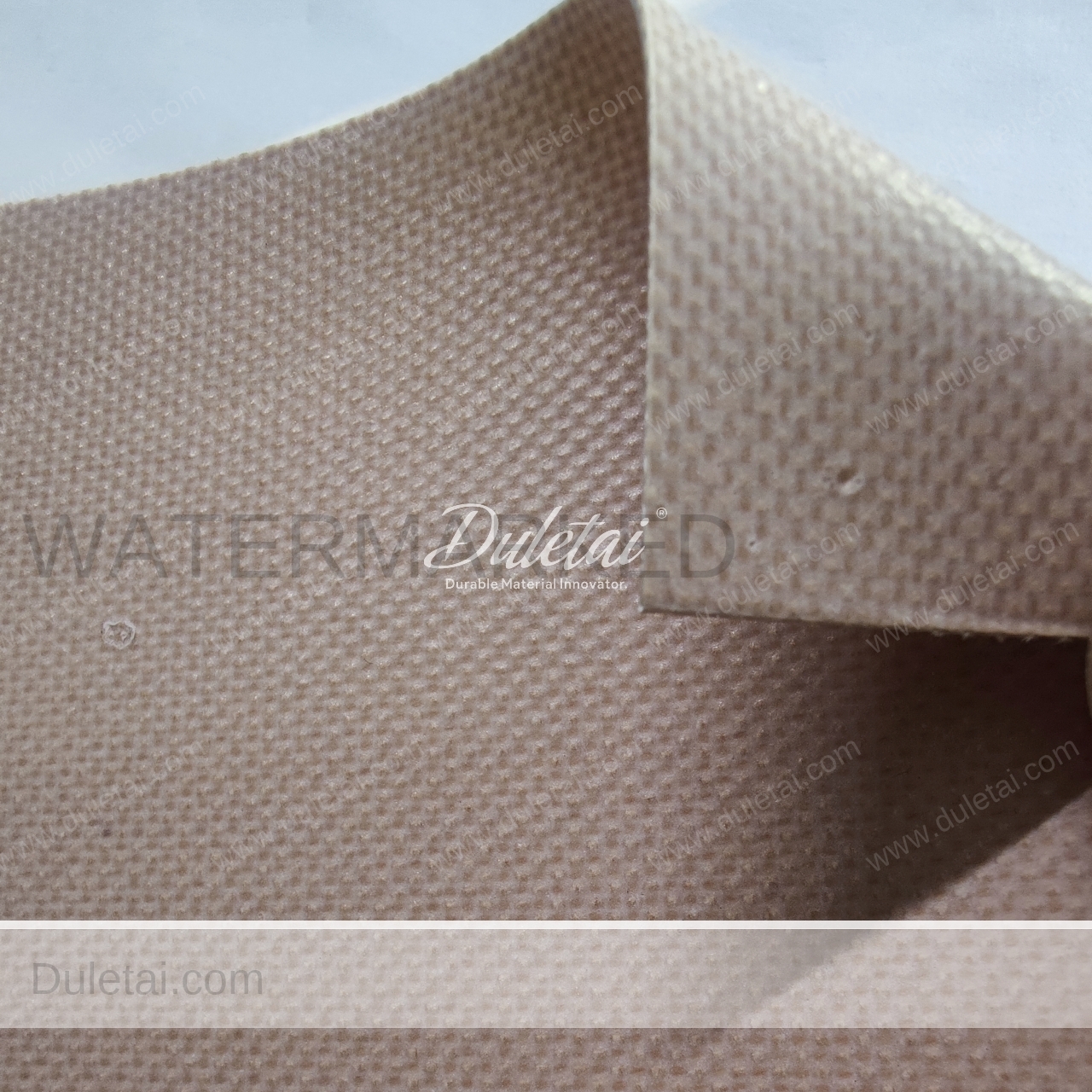
- PTFE coated fiberglass installs in a buff color and bleaches to a bright white with sun exposure, so the structure self-maintains a bright white appearance over time
SAFETY BENEFITS OF PTFE COATED FIBERGLASS:
- US Fire-Rated Noncombustible ASTM E-136, Class A Smoke ASTM E-84, Burning Brand E-108, CSFM Title 19, Pass NFPA 701
- Inherently non-flammable
- Class 1 rating in surface spread of flame testing
- UK Class 0 performance in BS476 pt6 fire propagation tests
DESIGN BENEFITS OF PTFE COATED FIBERGLASS:
- Flexible
- Lightweight (approximately 0.3 pounds per square foot, or 1.5kg per square meter)
- Single panels can be fabricated in almost any size and shape
- Large spans can be reinforced with structural cables
- PTFE coated fiberglass has highly elastic properties (10.5 x 10⁶ PSI modular elasticity)
- It does not significantly expand or shrink under stress
- It provides a significant degree of noise absorption and sound attenuation
- PTFE coated fiberglass can support up to 1,000 pounds per square inch (18 kg per mm)
- It can become a stage for beautiful and dramatic lighting effects
PREPARING A MEMBRANE MATERIAL ENQUIRY:
Share the project location, application, dimensions, drawings and material quantity. Include the desired appearance, daylighting requirements and specified material properties so the enquiry can be matched to the relevant membrane grade and product specification.
PTFE MEMBRANE AND MESH OPTIONS:
Choose the material form before comparing individual grades. The examples below link to current product specifications for a membrane and an open mesh.
| Material option | Weight | Width |
|---|---|---|
| PTFE fiberglass membrane, DLT-PJ6500 | 1150gsm | 3–3.8m |
| PTFE fiberglass mesh, DLT-PJM4000 | 700gsm | 2–4m |
FEP WELDING STRIP AND PTFE MEMBRANE FABRICATION
For PTFE-coated fiberglass membrane and mesh fabrication, use 0.8mm FEP welding strip at the seam. FEP welding strip is also described as FEP welding tape in the product datasheets. Select the fabric grade and the welding process together when planning architectural membrane panels.
Dedicated high-frequency welding
This process uses a dedicated high-frequency welding machine, with a current setting of 1.0–1.2A and a welding time of 8–10sec. Specify the dedicated equipment when discussing PTFE membrane fabrication.
Hot-air welding
The separate hot-air welding process uses a temperature setting of 550°C and a travel speed of 4–5m/min. These are the temperature and speed settings for the hot-air route; the high-frequency route uses its own current and timed welding cycle.
| Process | Equipment | Settings |
|---|---|---|
| High-frequency welding | Dedicated high-frequency welding machine | 1.0–1.2A; 8–10sec |
| Hot-air welding | Hot-air welding machine | 550°C; 4–5m/min |
Information for a PTFE fabrication enquiry
Provide the PTFE membrane or mesh grade, panel dimensions, seam layout, quantity, equipment type and selected process. Include the 0.8mm FEP welding strip requirement so the fabric supply and fabrication requirements can be discussed together. Compare the DLT-PJ9000 architectural membrane specifications and DLT-PJM5000 facade mesh specifications for two material options.
FAQ
Where is PTFE coated fiberglass used?
Architectural applications include stadiums, transport hubs, museums and public-space structures. Membrane grades are used for architectural coverings, while open-mesh grades are also offered for shading and building facades. Start with the intended covering or shading function when comparing the material options.
What is the difference between a PTFE fiberglass membrane and mesh?
The membrane and mesh are different material forms within the PTFE coated fiberglass range. Mesh has open areas between the yarns; its openness is an additional selection parameter alongside weight, width and strength. Compare the individual grade specifications with the project’s daylighting, appearance and covering requirements.
What fabrication information should I include in a material enquiry?
Include the drawings, panel dimensions, quantity, location, required material form, daylighting target and specified performance requirements. The two product grades above list hot-bar welding with FEP welding tape, so include the proposed seam process when discussing fabrication. Send a PTFE architectural membrane enquiry or review the PTFE membrane material range.