
Views: 1052
Outdoor projection screens can offer a lot of fun in nice weather. A projector can provide a large area for screening a film, and it can be fully customized. Projectors can be dressed up with curtains or other adornments or simply left in a minimalist style. However, it can be a daunting task to figure out how to start and to determine what is needed for construction. Getting good material for the screen is a crucial task. If the quality of the material is not up to the standards of the projector, it can degrade the picture quality. The material used may vary based on the builder’s budget, the size of screen desired, and the quality of the projector. The materials for an outdoor projection screen project can be found at big-box home improvement stores, electronics stores, and garage sales. They can be purchased in a kit or accumulated separately as one-off materials. These items and plenty of help from vendors can be found on as well. Building an outdoor projection screen can be a complicated process but, once it is built, it can provide years of backyard movie fun.
Building a Frame
The first step is to figure out the project budget and the size of the screen. As a general rule of thumb, the larger the screen, the more expensive it is. The quality of material is also a factor in budget. The projector and the picture quality it displays are big factors as well. If the projector sends out a high-definition picture, but the material used in the screen is not capable of accurately replicating a high-definition image, a potentially expensive projector can be put to waste. Once the builder has an idea in mind of what he or she can build and the size, the frame itself can take shape. Plans and ideas for frame building can quickly be found on the Internet.
Frame Materials
The frame itself can be constructed out of many different materials. These can be mixed and matched based on budget and ease of use. If the builder wants a more permanent setup, heavier frame materials, such as wood and thick metal piping, can be used to withstand the elements. Connectors can be put into place with nuts and bolts for a more secure setup as well. Of course, this is not ideal if the builder desires a temporary projector. If the builder wants to break down the setup between every use, thinner metal pipes or PVC pipes can be utilized for the frame. Lynch pins can be used to connect the corners for easy removal. Keep in mind that these temporary setups are not meant to withstand inclement weather. A strong wind can knock them over and destroy on what the builder has spent time and money.
Black Felt Edging
Black felt, while not technically part of the screen material itself, is an integral part of the outdoor screen setup. Pictures from a projector do not have clean edges as the light at the edge of the screen bleeds. If the material around the edge of the frame is light reflective, it is distracting to the eye. Black felt tape absorbs all of the light and gives the screen clean edges. This fabric can be bought in adhesive rolls, which can be placed with a steady hand and a laser level conveniently.
The Outdoor Screen
The screen itself can be made of many materials, and one of first things to consider is whether the projector used is meant to be front projecting or rear projecting. With front projection, the projector sits in front of the screen and throws out light onto a screen. With rear projection, the camera sits behind the screen. In this case, the screen must be designed to be transparent to allow light to pass through. Most temporary setups are front projection while more permanent setups may be rear projection to allow for the ability to protect the projector and any miscellaneous electronics that go along with the setup.
Material 1: Projector Screen Paint
There are many different materials that can be used for a front projection setup. One of the easiest ways is to use projector screen paint. This resembles paint that would be used to paint the walls of a house, but allows for high-contrast displays to be projected onto it. The downside of the paint is that it can be difficult for the builder to locate a space that is large and flat enough for the screen that is desired. Also, imperfections in an outdoor wall show up in the picture as well, which can be frustrating. However, for ease of use and installation, paint is a terrific option. Weather can deteriorate this paint, and reapplication may be necessary from time to time.
Material 2: Inflatable Setups
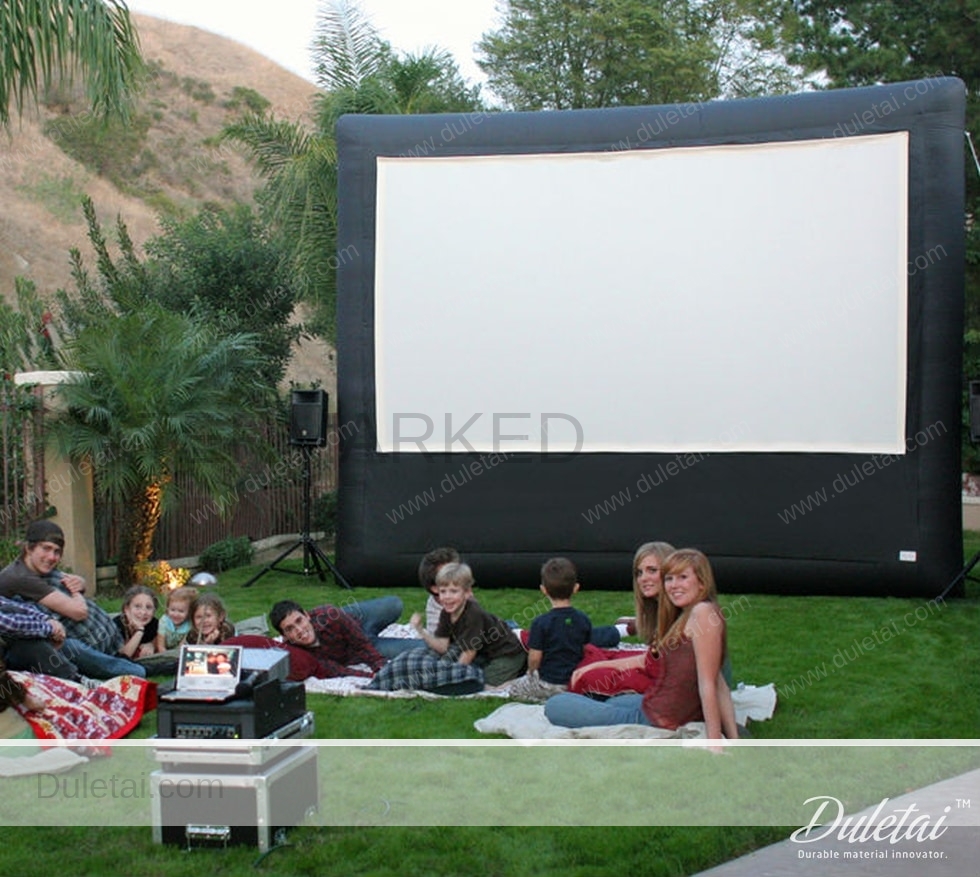
These setups can be both front and rear projection, and come in a variety of shapes and sizes. These can be found in some of the largest sizes available, and would be suited for large gatherings, such as a town picnic or a large backyard film screening. The ease of setup is also evident, as all that is needed is a pump for inflating the device and a hammer to knock stabilizing stakes into the ground. They are portable as well, allowing for easy use. If the builder is looking for an easy setup that does not require much labor besides operating an air pump or is looking to be able to move about with the theater setup easily, the inflatable screen is a great way to go.
Material 3: Blackout Cloth
In order to get the flattest, most durable, and most picture-stable screen, cloth-like materials should be used. Blackout cloth is one of the most popular options for theater screens. The material itself resembles movie theater cloth and can be cut to customizable lengths.
Material 4: Outdoor Fabrics and Tyvek
A cheaper option is outdoor fabric, which can be very durable in a more permanent setup. Usually made from Cordura, outdoor fabric can be found in the off-white coloring desired for a theater projection. Tyvek, manufactured by DuPont, is another option for outdoor fabric. While not necessarily cheaper than blackout cloth, Tyvek is a more durable product than both blackout cloth and most outdoor fabrics in an outdoor setting. The manufacturer touts it as strong, lightweight, flexible, and water-resistant, making it ideal for a more permanent outdoor setup.
Material 5: Billboard Tarps and Tarpaulins
For a project with a lower budget, vinyl billboard tarps can be used. These are usually repurposed, rather than brand new, and can be used to provide a very large white area. Although shiny vinyl is not the best material for an outdoor screen, it can be a great option for very large projection setups. Smaller tarpaulins that are usually reserved for home improvement projects can also be used, although these should only be thought of as a very cheap alternative solution. While a white or off-white tarpaulin can be found, the thick fibers and uneven surface do not make for good picture quality. If the builder has a high-end projector that puts out a high-definition quality picture, billboard tarps, and tarpaulins are not good options. A builder on a budget with a lower-end projector can find these materials sufficient for his or her needs, however.
Rear Projection Screens
The material for rear projection screens can be a little trickier. The projector sits behind the screen and projects a picture onto the back of the screen, which means that the screen must be semi-transparent. The main advantage to this is that there is not a large projector setup that takes up space in front of the screen, so there is better seating for guests. Movie watchers can spread out and view the film from all angles. The downside to rear projection is that the picture quality may not be as high as some of the front projection setups. The other major downside is that there can not be lights or even any light pollution from behind the screen, or the projection has a washed out quality to it.
Material 6: Spandex
One of the more interesting materials that can be used for rear projection is spandex. This can be stretched out and used as a great portable setup. The frames for this material usually have to be a bit stronger as the spandex needs to be stretched. Some spandex units come with frames designed to hold the taut piece of fabric.
Material 7: Trapeze
For those with a higher budget for making a rear projection screen, there is a material specifically designed for rear projection setups. The material is called Trapeze, and it is manufactured by Dazian. This is high quality, but is expensive compared to other materials listed. However, it is one of the more highly recommended fabrics for rear projection setups and provides excellent picture quality. It can be difficult to find the material, but it is well worth the search since the result is a high-end projector.
The following is a table with the materials for front projection outdoor screens, the pros and cons of each, and the link to each.
Material |
Pros |
Cons |
|---|---|---|
| Paint | Ease of installation; screen size can be whatever the builder desires | Can erode outdoors; can be difficult to find a good surface for projection |
| Inflatable | Portability, many size options; ease of setup | Cost |
| Blackout Cloth | High Quality; best picture quality | Cost; can mean cutting to size during setup |
| Outdoor Fabric and Tyvek | Durability | Not as good of picture quality as the blackout cloth; Tyvek can be expensive, especially if custom cut |
| Billboard Tarps and Tarpaulins | Durability; size; cost | Picture quality is not as good as cloth screen, even worse on home improvement tarps |
| Spandex | Cost; custom sizing | Can be rough on a frame when stretched taut |
| Trapeze | Best picture quality for rear projectors | Cost, especially for custom sizing; difficult to find |
Buying outdoor projection screens
is a fantastic place to secure all of the materials needed to construct an outdoor projection screen. One of the easiest ways to find anything you might be looking for is the search bar on any page. There is also a Projector Screens and Material category that can be of use when you are starting a search and looking for ideas.
Sellers and Ratings
In addition to a wide variety of materials, manufacturers, and options, has a lot of vendors selling these various items. The ability to find an answer to any question you may have is aggregated at . Just find an item you wish to inquire about, and any of the vendors that sell the item should be willing to answer any questions you may have. In addition, you can see information about each seller in the seller ratings and reviews. After your transaction, post a review of the seller to help other buyers.
Conclusion
Outdoor screens can be used for a variety of purposes. Whether it is for a movie night with the family under the stars or a backyard barbecue with friends while the big game is on, a good screen setup can really enhance the event. Once a good frame is built, a screen can be determined. The two large factors in determining how a screen is built are the project budget and the type of projector the user plans to use. There are many different materials for front and rear projection setups, and each has its pros and cons. One of the best places to buy all of the materials needed for an outdoor projection setup is . The user is able to find multiple examples of all the materials listed, and provides the buyer with a wide selection sold by many different helpful vendors.
Views: 689
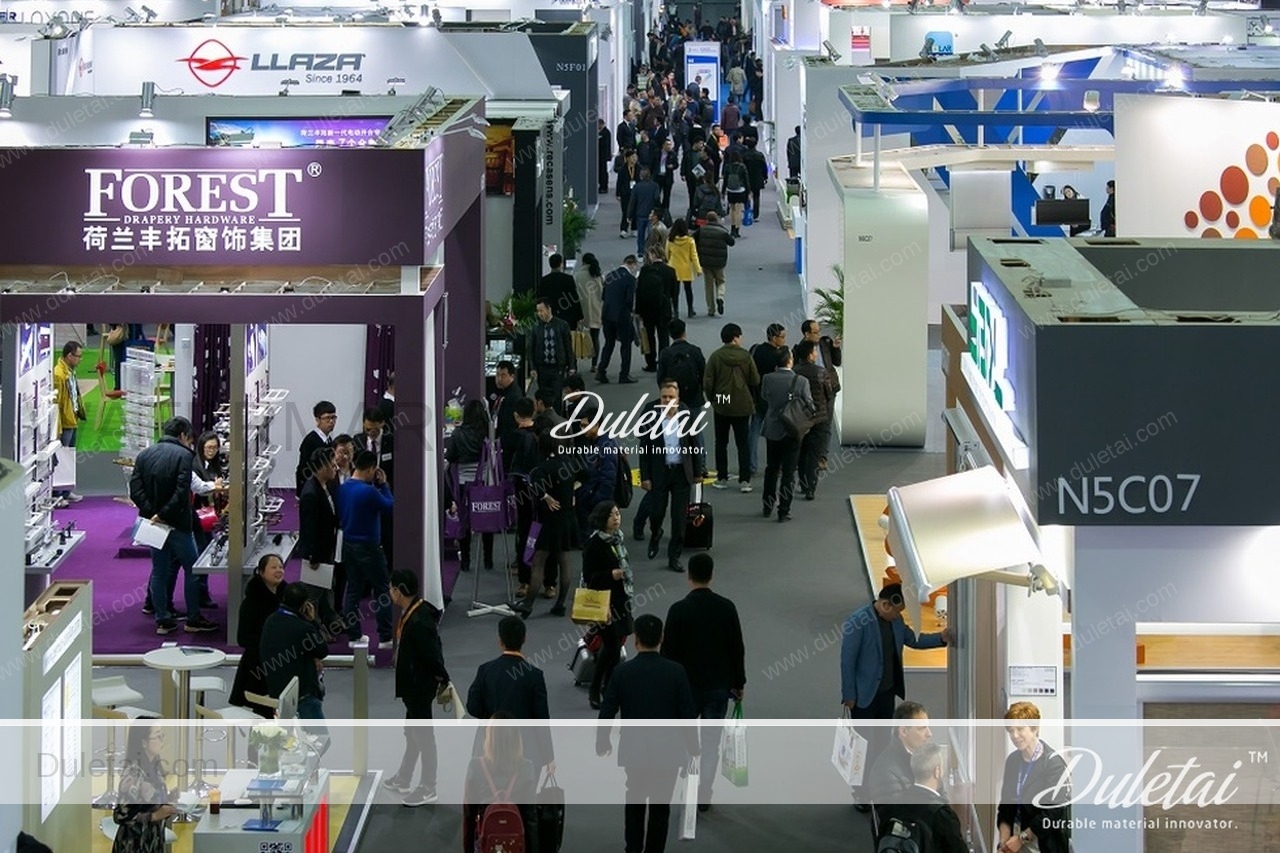
R+T Asia 2017 is the leading trade show for the Asia Pacific market, producing successful annual trade shows in Shanghai. This three-day business-to-business event will be held on March 21-23, 2017 and organized by VNU Exhibitions Asia and Messe Stuttgart. The international character of R+T Asia exhibition offers a perfect interactive platform for meeting all your key partners, potential customers, manufacturers, buyers, associations and media related to the sector of doors, gates, roller shutters, window covering, external sun shading systems and internal sun protection solutions.
External Sun Protection Systems (Roller Shutters, Window Shutters, External Venetian Blinds), Internal Sun protection Systems (Roller Blinds, Rainbow Blinds, Shangri La Blinds, Honeycomb Blinds, Vertical Blinds), Window Fabrics, Shading Systems (Awnings, Tarpaulins, Sunshades, Umbrellas, Pergolas, Tents), Venetian Blinds, Technical Textiles, Drive & Control Systems, Accessories & Fittings, Machinery, Interior Sun and Sight Protection, Automatic Doors, Industrial Doors, Entry Doors, Garage Doors, Drive & control devices, Accessories and fittings for door and gates, Machinery for doors and gates.
At the SNIEC Exhibition Center, the most modern in China, Messe Stuttgart, in cooperation with VNU Exhibitions Asia, organizes the R+T Asia, the trade fair for roller shutters, sun protection, roll and garage doors. The focus of the event is the demand from the markets of Asia/Pacific, as well as the import of foreign and export of Chinese quality products. The visitors will find a variety of new technologies and innovative products. The R+T Asia is considered the only exhibition of its kind in Asia.
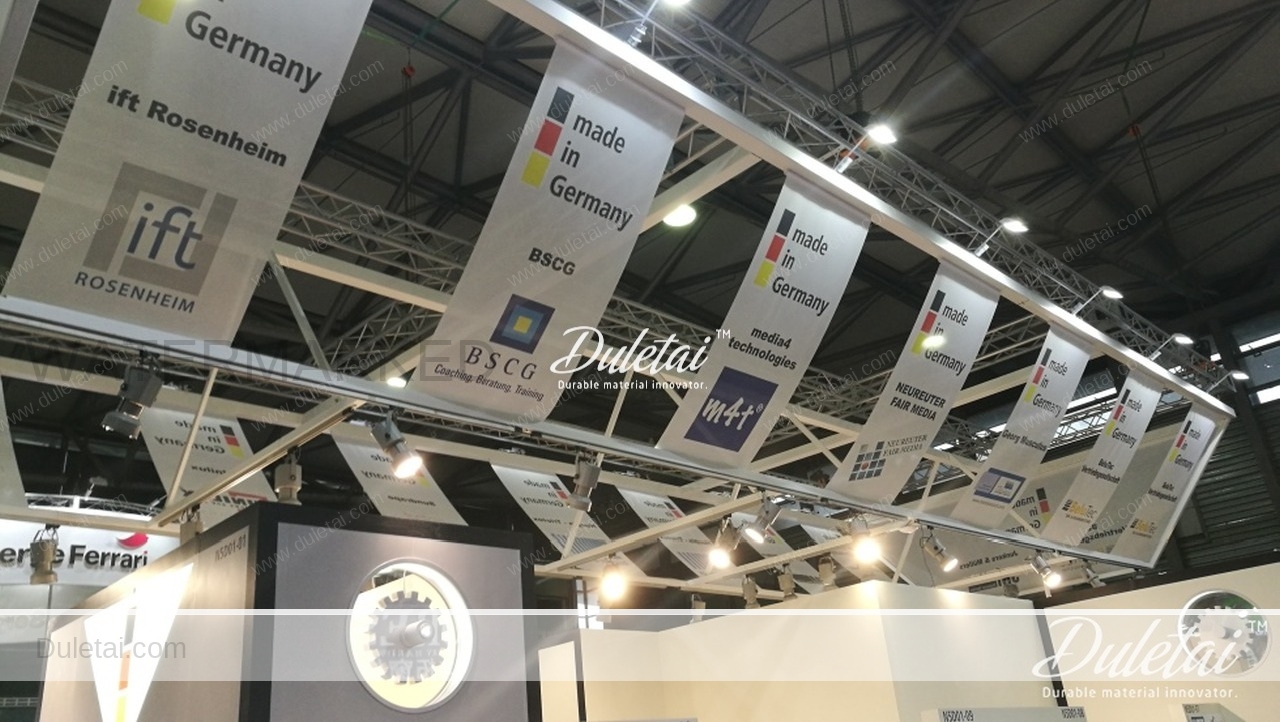
The purchasing volume for China’s window market has reached 4 billion RMB with 20% for Jiangsu, Zhejiang and Shanghai. East China is developing as an important hub for the window industry.
Energy saving, safety and comfort play a big role for windows and for integrated sun-shading solutions for civil buildings. The latest technologies of the global window industry will attract owners, architects and contractors.
The window industry is continuously developing and researching new technologies. Many window and door systems agents are also manufacturers. Some aluminum providers began producing their own window and door systems with standardized sizes, seeking to match the quality of Europe’s energy-saving doors and windows.
Income per person and living standards in China are increasing as are government standards for energy-saving buildings. China has 28 billion sqm of buildings, and many of them, with their doors and windows, are being renovated. Plus, China’s urbanization rate is higher than 50%, and the annual growth of the new construction market exceeds 20%.
In China 55% of doors and windows are made from aluminum, 35% are made from PVC, and 15% are made from steel or wood. The market for plastic windows in North China is significant. Copper and metal windows, often used in renovating old and historic houses, are a smaller part of the industry.

Views: 1250
Due to much advancement in solar optical technologies and testing, there is now more information about sunscreen shadecloths than ever before. Information that is useful in determining one of the more pressing questions when deciding on a shadecloth: polyester vs. fiberglass. The following is a report on how polyester core fabric and fiberglass core fabric compare in quality, durability, and fit-for-use. Based on our prior history with fiberglass core, our subsequent experience with polyester core, and test results from independent lab tests, we find that despite its traditional strengths in other products, fiberglass does not match the quality and performance of polyester as a sunscreen.
There are similarities in the polyester and fiberglass yarns. Both types of fabric are coated with vinyl, so the emissivity is virtually identical. Polyester core yarns are extrusion-coated, while fiberglass yarns are dip-coated. Both end up as vinyl-coated yarns woven into a solar shadecloth on a standard loom. The woven shadecloth is then cured under heat and pressure. This process seals in the yarns and creates a non-raveling shadecloth suitable for roller screens. Both fiberglass and polyester core fabrics meet the UK, US, and Canadian fire resistance codes for window coverings.
The major difference between polyester and fiberglass shadecloths is in the strength and durability of their core yarns. For all physical property tests (Grab Tensile Strength, Tearing Strength, Ball Burst Strength, and Abrasion Resistance) polyester core fabric was superior. This can be attributed to the polyester core and a high-quality plasticizer, the same type used on radial tires. This plasticizer also provides excellent resistance to fading, abrasion, mildew, rot, and chemicals. Even when produced in light colors, polyester core will not yellow as opposed to light-colored fiberglass core.
The polyester core construction tends to be more dimensionally stable, performing better in all construction tests. In the Stretch and Recovery Test, polyester core shades retain their original shape and form, particularly if the shades are quite large. The thermoplastic matrix of polyester and vinyl allows a sealed-cut edge, with a protective bead, which is not possible with a fiberglass and vinyl screen cloth. The fiberglass is inert and will not bind to the vinyl coating. Thus fiberglass core gets distorted and does not retain its original shape.
Fiberglass yarn consists of very fine and short-staple fibers. To manufacture these at a given density, it requires the inclusion of far more threads than a Polyester Core screen cloth, resulting in a higher price and no practical advantage over polyester, regardless of the openness factor.
For more information, please call +86 (133) 9683-2665 , or contact our sales representative.
Views: 644
Holographic projection has become a global phenomenon and in the last few years Screen Solutions has seen an overwhelming demand for this technology, as interest increases so do the misconceptions and further need for proper education. Screen Solutions Intrigue line of holographic projection screens are available in both projection film and rigid projection screen surfaces.
Upon reviewing the information on this page and the accompanying pages you will have both a clear understanding and comprehensive grass roots training on the holographic projection screens – what they are and what they are not and most importantly how to use them.
To start there are a number of misconceptions and repeat questions we hear everyday regarding holographic projection screens, by answering these common questions which you may or may not have it will serve as the best way to immerse yourself in holographic projection screen technology. There are several topics and a plethora of practical information regarding holographic projection and best practices;
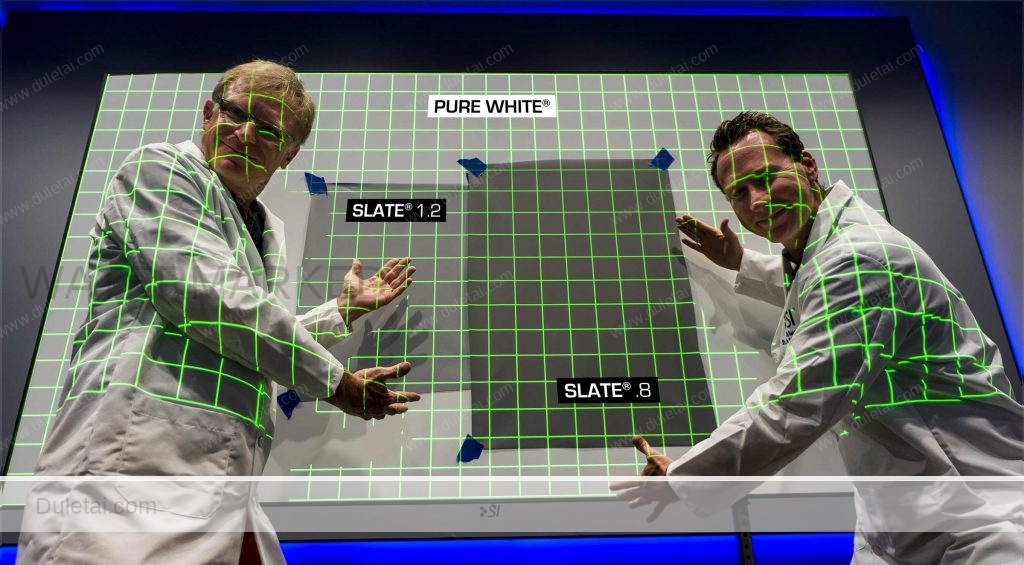
This picture shows you a 120″ Diagonal, Screen Solutions Intrigue Holographic Rear Projection Screen in an Under Armour Retail Store – Pennsylvania. They use this particular holographic projection screen for in-store digital signage and media presentation.
Great for 3D object floating on a Intrigue transparent holographic projection screen.
3D graphics floating on a Intrigue transparent holographic projection screen.
3D wireframe graphics on a Intrigue Rear Projection Screen
Views: 749
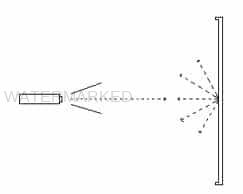
Diffusion screen fabric; Standard Matt white, gain ~1
Diffusion screens spread the projected light evenly over a wide viewing area.
Is the ideal choice for any application which requires a wide viewing angle or when ambient light is controllable.
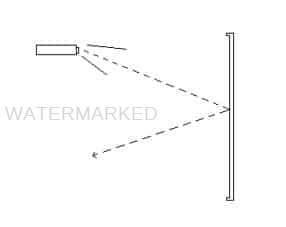
Reflective screen fabric; Datalux, Pearlescent. gain ~2
Gain is obtained using a special coating that reflects light over a small viewing area.
Light rays projected on the screen are reflected like a mirror, so that light arriving at a certian angle from
the top will be reflected at an equal and opposite angle to the bottom.
Ideal for situations where ambient light cannot be controlled.
Because of the relective properies, this screen fabric is well suited when projectors are ceiling mounted.
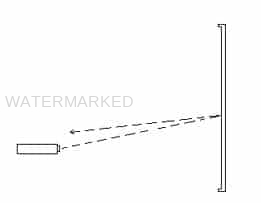
Retro-reflective screen fabric; High power. gain ~2.8
Retro-reflective screen fabrics have a surface which is impregnated with tiny glass beads producing
a reflected image of unequaled brightness.
With retro-reflective screen fabrics most of the light is reflected back to the source.
Ideal for situations when theres a high amount of un-controllable ambient light.
Best results are achieved when the projector is positioned on the same level as the audience, because
most of the light is reflected back along the same path.
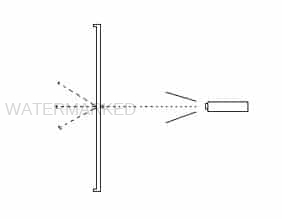
Reversa Screens ; Rear projection. gain 5.8
Solid rear projection screens that obtain record breaking gain values
Designed to be used anywhere including in bright sunny
conditions.
LUX:
Reflected light is measured in lux.
Research has shown that approx. 400 lux is an adequate luminance value for showing images under normal light conditions.
Lux is calculated as follows:

——————————————-
Projected image area
(square m)
Example:
Using a 1500 ANSI lumen projector with the Projecta Pro wall screen 1800, matt white finish (gain 1).

——————————————-
3.24 m
(1.8m x 1.8m (HxW))
Please allow for a higher lux value if you have higher than normal ambient light (ie. direct sunlight).
Because of the uniqueness of different situations, the above advice should only be used
as basic guidelines, not as essential criteria.