
Latest posts
-
PVC Surface Finishes & Anti-Wicking
Understand PVC finishes, anti-wicking and knife... -
PVC Tarpaulin Datasheets Explained
Learn how to read a PVC tarpaulin datasheet, fr... -

PVC Tarpaulin Fire Standards
A practical guide to PVC tarpaulin flame retard... -
Flame Retardant PVC Tarpaulin
Views: 2712 Flame retardant PVC tarpaulin is a ... -
Weather-Resistant PVC Knife-Coated Tarps
Views: 1796Weather-resistant PVC knife-coated t...
PVC Flex Banner Production: Coating and Lamination
Views: 1216
PVC flex banner production uses three principal methods: knife coating, calendering and lamination. Each process combines PVC with a supporting fabric in a different way, influencing the surface, light transmission, ink absorption and finished material construction.

KNIFE COATING:
Liquid PVC slurry is applied uniformly to both faces of the base fabric using a series of coating blades. Drying combines the PVC and fabric into an integrated material, followed by cooling to form the finished banner.
The process provides penetration resistance, tensile strength and resistance to peeling. The integrated upper and lower construction can eliminate peeling, and welded joints can be stronger than the material itself. Widths can reach 5m. Complex production processes and expensive equipment contribute to higher prices; this process has been associated mainly with imported products in the Chinese market.
CALENDERING:
PVC powder, liquid plasticizer and other raw materials are thoroughly mixed, then bonded to the base fabric under pressure from high-temperature rollers. The result has good surface flatness and uniform light transmission, making it useful for internally illuminated displays. Equipment limitations generally restrict width to no more than 3m.
LAMINATION:
Upper and lower PVC film layers are heated and pressed around the central reinforcing web by heated rollers, then cooled to form the finished material. This process offers excellent ink absorption and strong color reproduction, supporting large-format inkjet printing. Laminated PVC flex banner has accounted for more than 70% of the Chinese market.
PVC FLEX BANNER APPLICATIONS:
Ultra-thin light boxes and space-limited displays
Applications include wedding photography studios, home and architectural decoration, design and planning institutes, product design centers, and bridge and building projects. Ultra-thin light boxes have an elegant, lightweight construction, generally less than 3cm thick—about one-tenth of the thickness of conventional light boxes. This saves space, simplifies installation and transport, and suits elevators, public passages, shopping malls, supermarkets, subways and stations.
Public, educational and cultural venues
Decorative and promotional projects include exhibition halls, museums, libraries, gymnasiums, art galleries, opera houses, universities, middle schools, vocational schools, hospitals, banks, insurance companies and securities businesses.
Retail and commercial promotion
Uses include conference, exhibition and licensing centers; municipal projects; department stores, supermarket chains and shopping plazas; jewelry and cosmetics shops; beverage, tobacco and alcohol businesses; fast-food and pharmacy chains; stationery, boutique and furniture centers; home-appliance wholesalers and musical-instrument retailers.
Municipal lighting and information displays
Projects include municipal flat lighting, square ground lights, park information, lantern festivals, community bulletin boards, waiting booths, bank self-service withdrawal points, telephone booths, emergency power facilities, building displays, airport access points and subway exits.
Hospitality and leisure decoration
Wall graphics and decoration are used in hotels, guesthouses, restaurants, villas, tea houses, western restaurants, cafes, cake shops, bars, karaoke rooms, dance halls, saunas, beauty salons, fitness rooms and health centers.
FAQ
How is laminated PVC flex banner made?
Heated rollers press upper and lower PVC films around a central reinforcing web. The material is then cooled to create the finished banner construction.
Which process provides a flat surface and uniform light transmission?
Calendering provides these features by bonding mixed PVC material to the base fabric using heated rollers. These characteristics are useful for internally illuminated displays.
What should I specify for a PVC flex banner enquiry?
Provide the printing process, intended display or light-box construction, roll width, weight, finish, quantity and required material properties. Explore PVC laminated flex banner or send your banner fabric requirements for a material discussion.
- Published in News
Exterior Solar Screen Fabric for Blinds
Views: 741
Exterior solar screen fabric is used in outdoor blinds and panels to reduce the direct effect of sunlight on enclosed spaces. Depending on the material, it helps regulate indoor temperature while supporting glare control, UV protection and daytime privacy.

BENEFITS OF EXTERIOR BLIND MATERIAL:
Protection against UV rays
Exterior sun-control materials protect against harmful ultraviolet rays that can damage or fade flooring and furnishings and contribute to higher energy costs.
Lower energy and air-conditioning costs
Engineered to disperse heat from the sun’s rays, exterior sun-control screening can help save up to 25% on energy and air-conditioning costs while making indoor temperatures more comfortable throughout the year.
Reduced glare
Exterior screening helps reduce solar glare inside the home, making it more comfortable to work, read or watch television without squinting.
Insect protection
The exterior screening range also includes innovative insect-protection screening, a feature for which the company has built its reputation.
Improved daytime privacy
Exterior sun-control material can be used in panels that add an extra layer of daytime privacy. A variety of weaves and colors allows the screen to be matched to the intended appearance and screening requirements.
FAQ
What does exterior solar screen fabric help control?
It helps manage direct sunlight, UV exposure, solar heat and glare. Exterior panels can also add daytime privacy, with the material and weave selected for the intended use.
How should I choose the weave and color for an exterior blind?
Start with the desired screening effect and appearance, then compare the available weaves and colors. Include the required daytime privacy and light-control effect when reviewing the material.
What information is needed for an exterior blind material enquiry?
Provide the opening or panel dimensions, intended blind construction, mounting arrangement, color, weave preference and quantity. Describe the required solar, glare and privacy performance. Send your exterior blind fabric requirements for a material discussion.
- Published in News
PVC Coated Tarpaulin Uses: Applications by Industry
Views: 1002
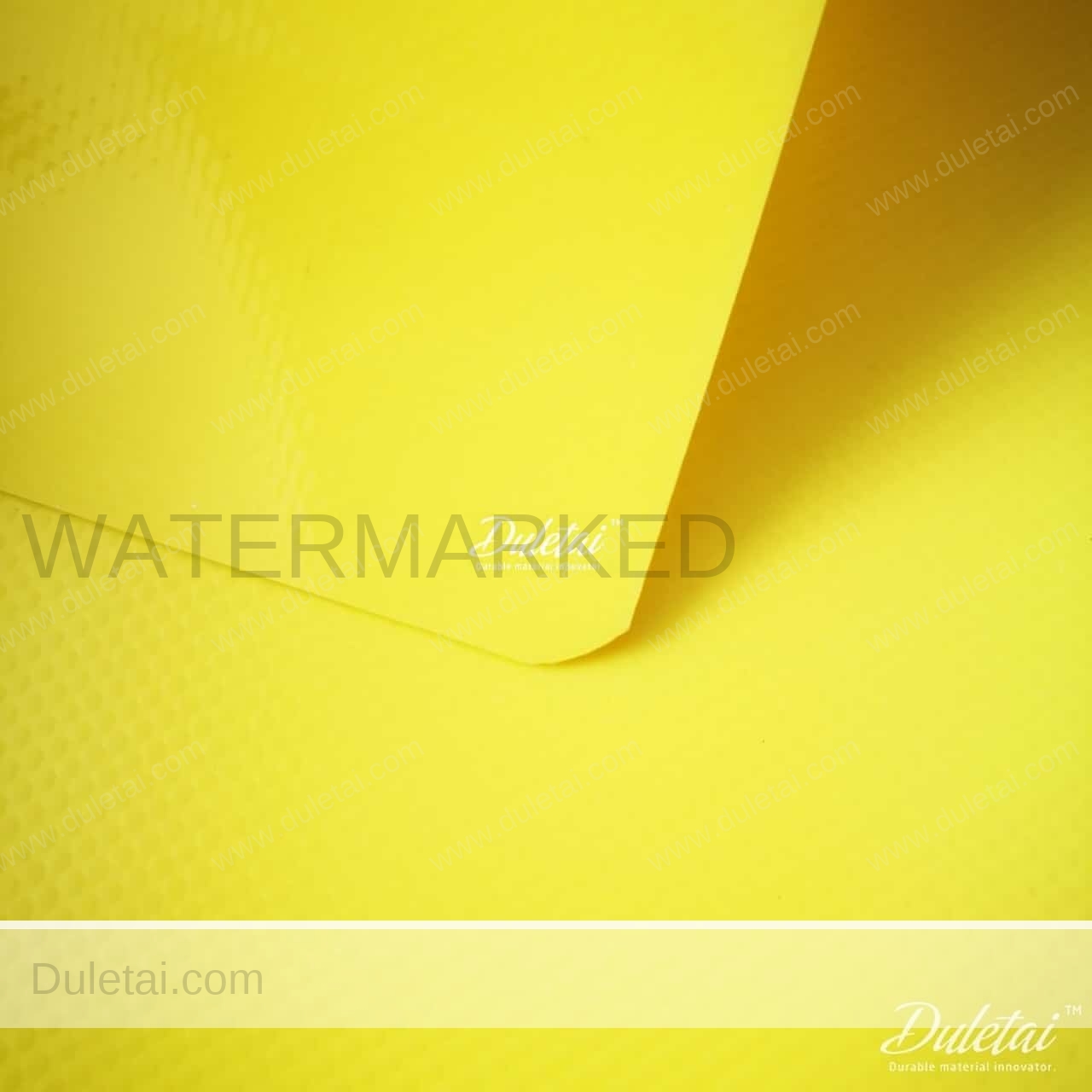
PVC coated tarpaulin is a polymer composite fabric with polyvinyl chloride (PVC) as its coating. Its softness, elasticity, wear resistance, weather resistance and weldability make it useful across building, transport, recreation, bags and other industries.
MATERIAL PROPERTIES AND TREATMENT OPTIONS:
PVC coated fabric offers high elongation, a soft handle and a choice of colors. It is convenient to use and easy to weld. Depending on the intended environment, cold-resistant, UV-resistant, anti-wicking and other surface treatments can be selected for different applications.
PVC COATED TARPAULIN USES BY INDUSTRY:
| Sector | Application examples | Selection information |
|---|---|---|
| Construction and building | Membrane structures, canopies, tents, awnings, parking shelters, sliding awnings, roller-shutter doors and partition fences | Cover or panel size, fixing method and required finish |
| Recreation and entertainment | Bouncy castles, gymnastic mats, kayaks, pool liners, surfboards, snow tubes and RV sunshades | Finished product design, dimensions and fabrication method |
| Safety and protection | Oil booms, pool covers, triangular warning signs, work aprons, horse-farm fences, ventilation ducts and anti-inflammatory nets | Intended function, construction and specified material properties |
| Logistics and transportation | Waterproof sheeting, truck side curtains, pickup-truck canopies and container tops | Cover dimensions, fixing points and handling requirements |
| Bags and luggage | Waterproof bags, document bags, liquid bags, water bladders, dry bags and takeaway boxes | Finished size, joining method and surface finish |
| Agriculture and animal husbandry | Poultry-house conveyor belts, livestock roller shutters and sunroom applications | Installation dimensions and intended operating environment |
| Medical and health | Medical mattresses, body bags and dust covers | Finished product construction and specified material requirements |
| Advertising and media | Projection screens and digital printing materials | Print or projection setup, dimensions and surface requirements |
FAQ
Which industries use PVC coated tarpaulin?
Uses span construction, recreation, protection, transport, bags, agriculture, medical products and advertising. The application table above lists examples ranging from covers and tents to ducts, flexible containers and printed materials.
Which special treatments can be considered for the material?
Cold resistance, UV resistance, anti-wicking and other surface treatments can be selected according to the intended environment. Describe the finished product and specified properties when comparing the available materials.
What should I include in a PVC coated tarpaulin enquiry?
Provide the application, drawings or finished dimensions, required weight or thickness, roll width, color, finish, quantity and fabrication method. State the relevant material requirements for the intended product. Browse the PVC tarpaulin range or send your application and material requirements.
- Published in News
PVC Laminated Fabric: Construction, Features and Uses
Views: 1063
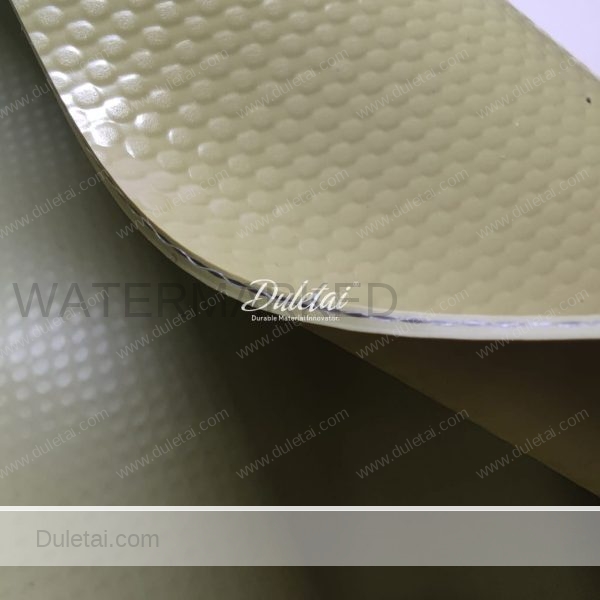
PVC laminated fabric combines PVC film with a textile reinforcement to form a multilayer material for transport, tents and construction. In transparent mesh constructions, the grid remains visible through the PVC film, giving the material a three-dimensional appearance. The handle can range from soft to firm.
MATERIAL TYPES AND APPLICATIONS:
The range is produced from new materials and includes environmentally friendly, low-toxicity options for outdoor use over 3–5 years. Two broad grades are available: general-purpose fabric without special environmental requirements and environmental-protection fabric. General-purpose material is relatively inexpensive, corrosion-resistant and easy to process; the environmental-protection grade is priced higher.
Applications include rainwear, tarpaulins, bags, sunshades, toys, traffic warning signs and special clothing.
MESH AND REINFORCEMENT OPTIONS:
Mesh-based composite materials include PVC mesh, EVA mesh, rubber mesh and TPU mesh. PVC mesh is a common option. The PVC component is polyvinyl chloride, while the middle reinforcement can use polyester or nylon. General yarn and high-strength yarn provide different strength options.
Yarn and textile constructions include combed and semi-combed options, warp knitting and weft knitting. Different yarns, densities, mesh patterns and reinforcement constructions produce fabrics with different thicknesses, colors, strengths and specifications.
FEATURES OF PVC LAMINATED FABRIC:
Waterproof performance
The combination of PVC and textile reinforcement provides strong waterproof performance for outdoor products such as tents and umbrellas.
Low-toxicity material options
Environmentally friendly, low-toxicity materials are used to support a safer environment for users.
Outdoor service life
The mesh-reinforced material has a long service life, with 3–5 years of outdoor use described for this range.
Flame resistance
Strong flame-retardant and non-flammable properties support outdoor fire safety.
UV resistance and sunshade use
The multilayer construction provides strong UV resistance, making the fabric particularly suitable for sunshades.
Toughness for outdoor products
The fabric has high toughness and resists tearing when outdoor tents are exposed to high winds.
PVC MATERIAL CHARACTERISTICS:
Polyvinyl chloride offers good insulation, chemical stability, acid and alkali resistance, established manufacturing processes and a relatively low price. It also has resistance to high and low temperatures.
FAQ
What is the reinforcement inside PVC laminated fabric?
The middle textile layer can use polyester or nylon, with general or high-strength yarn. The chosen yarn, density and construction affect the finished fabric specification.
Which products use PVC laminated fabric?
Uses include transport covers, tents, construction materials, rainwear, bags, sunshades, toys, traffic warning signs and special clothing.
What details help define a PVC laminated fabric order?
Provide the intended use, required dimensions, thickness, color, reinforcement preference, strength requirements and quantity. Explore PVC laminated tarpaulin or send your fabric requirements to discuss the available material options.
- Published in News